
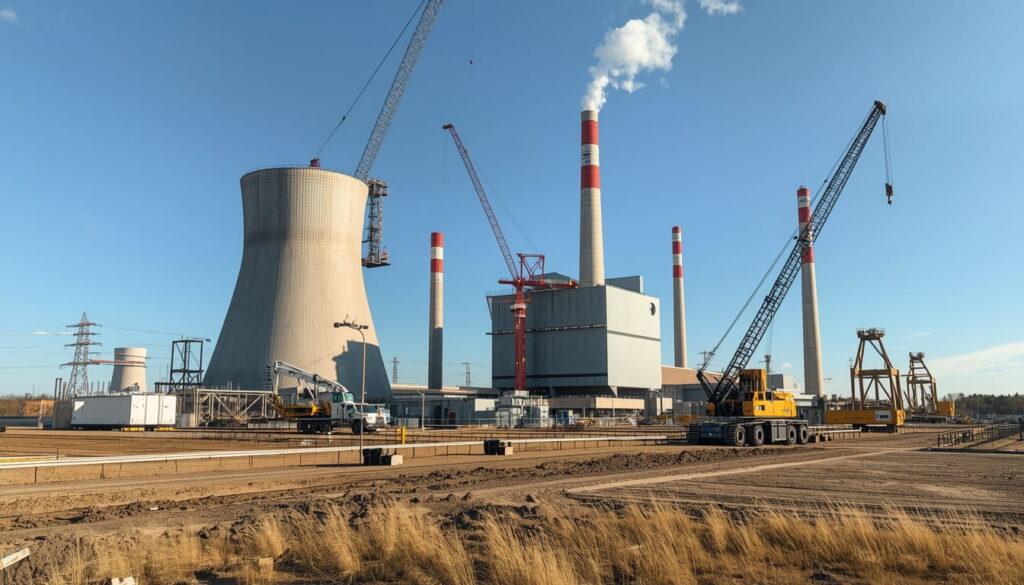
An innovative 33-gigawatt power plant that runs on natural gas is being developed in southern Ohio, making the state a central hub in the country’s artificial intelligence infrastructure boom. The project, based in Pike County, is expected to drive significant economic growth, but it has also sparked debate over its scale and environmental impact.
Project Overview
The proposed facility will produce 9.2 gigawatts, making it one of the largest power plants of its kind in the United States and possibly the world. It will provide power to a large data centre complex on about 1700 acres of government-owned land where the old Portsmouth Gaseous Diffusion Plant used to be.
On March 20, the project entered the ground, indicating a strong push towards construction. The plant will address the skyrocketing demand for reliable power, fuelled by growing AI technologies, once it is operational.
Distinct Financing and Ownership Structures
The difference between this initiative and others lies in its unique financing model. The government of Japan will finance the plant, and the United States government will still own the plant. It is rare for a foreign ally to contribute to a large domestic energy project that will be controlled by the federal government.
Proponents point out the structure as a strategic alliance that leverages global capital without national control over vital infrastructure. According to industry analysts, this kind of collaboration may become more common as the U.S. competes to expand data centre capacity.
Economic Effect on Ohio
Local business groups and leaders expect great economic gains for the state of Ohio. The project will generate thousands of construction and long-term operation employment opportunities in a region where economic difficulties have been experienced over the past decades.
Pike County and the nearby regions will benefit from tax growth, infrastructure improvement, and associated business investments. According to state officials, the development is a significant victory for energy independence and high-tech evolution, aligning with broader trends to encourage high-tech industries in the Midwest.
Problems and Social Understandings
Although there is positive news regarding the attitude of economic development advocates, environmental groups, and some residents question the use of natural gas and the possible consequences on the quality of air and water in the region.
Proponents respond that the current emissions regulations and the fact that the plant will also host clean-tech data operations will yield net positive results. Continuous review of regulations will dictate the ultimate schedules and terms of full approval.
This power plant is a bold step forward for Ohio as it seeks to establish itself as a centre of high-tech manufacturing and digitalisation. The project highlights the state’s potential to attract radical investments that would combine energy generation with the requirements of next-generation technologies and provide an idea of the economic environment of the next decade.